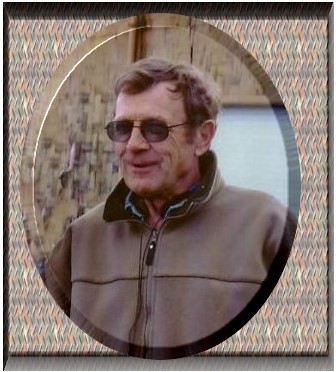
The Bird
Connection
Ever since I was a little kid,
birds have held a special fascination for me dating back to the days
when my father used to take me out on the east side of our barn every
first day of spring -- my birthday --, to listen for and whistle replies
to the first meadowlark. And much later, as a literature teacher, I
still found myself gravitating toward stories and poems in which birds
were featured as major symbolic elements.
Our recent visit to my son
Brett's place in Rosevill, California brought me into contact with
white-crowned sparrows of the variety that I used to hear singing on
spring nights outside my window near Lebanon Oregon. Hearing those
beautiful silvery notes issuing out of the blackness of the early spring
nights nearly always brought a thrill of wonder as to how such a miracle
could be.
Seeing the white crowns
brought to mind the climax of Faulkner's monumental short story, “Barn
Burning”--about a boy whose Satanically revengeful father would
continually get sharecropping jobs from rich plantation owners only to
get offended by their rules and use that offense as an excuse to sneak
back at night and burn their barns. In Faulkner's story, the hero,
Sarty, hearing the gunshots in the dark that put an end to his father
and brother, runs for his life on a dirt road toward the glimmer of a
dawn –symbolic of a glimmer of hope for his tormented young soul. The
accompaniment of that scene is the choiring of whippoorwills whose
liquid, silvery, notes intensify as the light of day increases. I can
never read that page without the kind of chills of wonder that inspire
one to major in English--just in the hope of experiencing more such
mind-blowing arias.
Those sparrows also brought
to mind an unforgettable happening I had out hiking up on Peterson's
Butte back in Oregon. It was a drizzly, weird kind of late winter
afternoon. I was making my way down a deer trail near my home, when out
of the gloom came this silvery cascade of absolutely beautiful, bubbling
notes. I froze, and looking up, spied a tiny Seattle wren. 'Please, one
more time', I thought. And Glory of Glories he sang it again, several
times. I took it as a special blessing-- just for me, personally, for
braving the gloom to hear it.
That experience prepared me
to appreciate the great poem Thomas Hardy wrote about one of his hikes
through the rainy Wessex heights: He's walking through a similar kind of
gloom when he hears “The Darkling Thrush,” “At once a voice arose/ Among
the bleak twigs overhead/ In a full-hearted evensong /Of joy illimited/
An aged thrush, Frail, gaunt, and small/ In blast-be ruffled plume / Had
chosen thus to fling his soul/ Upon the growing gloom” … That I could
think there trembled/Through his happy, good-night air/ Some blessed
thought whereof he knew/ But I was unaware.”
And one cannot speak of
soul-stirring bird songs without citing perhaps the greatest poem ever
written about them, Keats' “Ode to a Nightingale'. The young poet, dying
of T.B., deems the silvery flow of the nightingale's song a fitting
river by which to leave this world of pain, torment, and
disillusionment. “Darkling I listen, and for many a time/ I have been
half in love with easeful Death/Called him soft names in many a mused
rhyme/ To take into the air my quiet breath/ Now, more than ever seems
it rich to die/ To cease upon the midnight with no pain/ While thou art
pouring forth thy soul abroad/ In such an ecstasy/ Still wouldst thou
sing and I have ears in vain/ To thy high requiem become a sod'.
And Robert Frost, in his poem
“Come In” is also tempted into the dark by a thrush: “Far in the
pillared dark thrush music went/ Almost like a call to come in to the
dark and lament/ But no, I was out for stars/ I would not come in, even
if asked/ And I hadn't been.”
Then, there's Eudora Welty's
masterpiece, “The Worn Path”, in which the main character is
figuratively a mythological bird. Her name is Phoenix Jackson, a 100
year old daughter of slaves, and the whole story dramatizes the flaming
human Spirit hiding within the aging members of a person more heroic
than words can express. But one most of the people around her consider
sub lower class.
That story should be required
reading for everyone—especially those harboring racism. Remember, the
phoenix was a mythical bird of fire that lives 500 years and then is
reborn out of its own ashes. The story of the myth is the story of
Phoenix Jackson. I beg you all to look or Google it up and read it over
and over. It is a life-changer.
And, while I'm at it, let me
include Percy Shelly's “To a Skylark”, a poem in which a self-confessed
atheist demonstrates he is anything but: “Hail to thee Blythe
Spirit,/ Bird thou never wert/ That from Heaven or near it/ Pour-est thy
full heart/ In profuse strains of un-premeditated art/ Teach me half the
gladness/ That thy brain must know/ Such harmonious madness from my lips
would flow/ The World should listen then/ As I am listening now!”
Surely God gave us birds not
just as auditory decorations for our idle hours, but as living, soaring,
beautifully singing proof that there are divine things, higher things
for us “to stay our minds on and be stayed.” Paul says in Philippians
Ch. 4. “Whatever things are true… whatever things are lovely . . .
whatever things are of good report—Think on those things.” And
that's why I think a lot about birds.
Gene Pinkney – 1/8/20 - For
the Daily News
html upload 08-22-2021